My childhood play stories are filled with bicycle rides: long afternoons of reckless joy, steep descents, and inevitable falls. At one point I had a major crash that left both me and a friend injured and scarred. Those scars remain to this day, yet they engrave something strangely satisfying: a memory of childhood that feels bittersweet but overwhelmingly tender. Time has edited the pain out of it. I remember the thrill, the laughter, the sense of freedom. And so I grew up liking bikes.
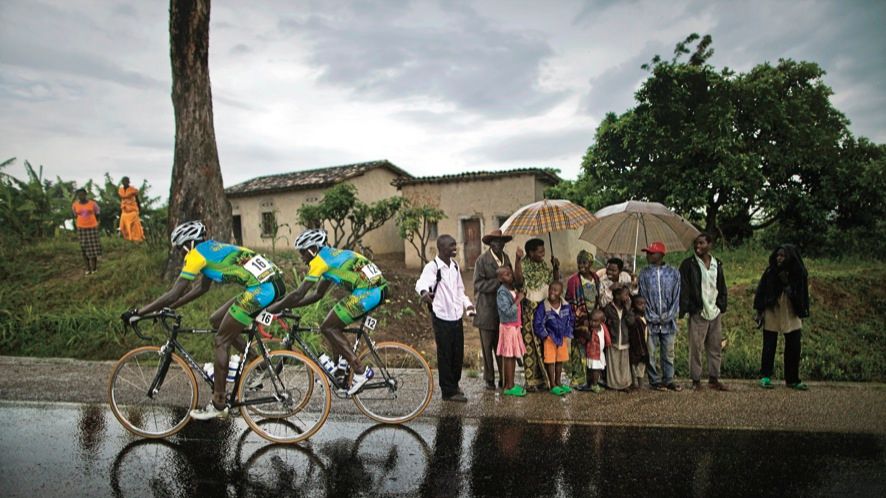
Rwanda is, in many ways, a bicycle nation. Yes, many people walk; to work, to school, to markets. But it is the bicycle that quietly sustains movement and exchange, especially in rural areas. One sees men balancing sacks of Irish potatoes twice their size, crates of soft drinks strapped precariously to metal frames, bunches of green bananas tied carefully with rope. A mechanic’s small roadside stall, tools spread out on a wooden bench, keeps dozens of livelihoods in motion. The bicycle is not romantic there; it is practical, essential, dependable. Motorcycles entered later, as incomes improved and distances stretched. Meanwhile, the urban middle class has grown nearly obsessed with cars, helped along by a public transport system that remains unreliable at best. But that's for another day.
I began paying attention to cycling differently nearly fifteen years ago, perhaps when I first read Philip Gourevitch’s stories on Team Rwanda in The New Yorker. Nothing was more compelling than seeing Rwandan cyclists portrayed not only as athletes but as symbols of endurance and recovery. Gourevitch, arguably the world's most influential writer on Rwanda’s post-genocide story, captured something larger than sport. He wrote about resilience through the language of climbing hills.
One story in particular stayed with me: Gourevitch’s account of “Rocky,” the Rwandan rider who lost an eye in a freak roadside accident and returned to training within days. In “Rocky and Rwanda,” Philip Gourevitch writes that cycling is not really about winning but about refusing defeat:
In most sports, either you win or you lose, but in cycling, nice as it is to win, what really matters is refusing defeat. You might go down—you almost certainly will go down at some point—but you don’t drop out. Bike racing is about being undeterrable and undistractible.
Rocky’s injury had nothing to do with racing; a shard of rock tore through his eye as he walked past a labourer at work. Yet during recovery, what he asked for was a set of rollers so he could keep pedalling. The image of Rocky, adjusting to partial blindness and still training toward a future, says more about Rwanda’s cyclists than any medal table could.
This post is for subscribers only
Sign up now to read the post and get access to the full library of posts for subscribers only.