
Notes from the Hills: The youth at Muhoza
A youth centre in Musanze and what you encounter when you keep coming back.

Turn phone calls into completed transactions. Pindo is a technology company specialising in Voice AI.
On a long evening walk on Wednesday this past week, I found myself back at the sector offices here in Musanze. The gates were open but the lights were dim, just enough to mark the place without drawing attention to it. You could tell it was night without needing to check the time.
A guard sat at the balcony in front of the main building. I saw two others move slowly and then quickly around the compound. The canteen looked open, so I walked towards it, looking for some sign of activity, but there was none.
It was cold outside, and by eight in the evening, most people here are already home. Those who are not seem to be on their way there, too. I continued my walk through town, paying a little more attention to some of the buildings that had become familiar, not getting pulled into the many activities around, but still leaving room for whatever else Musanze might reveal.
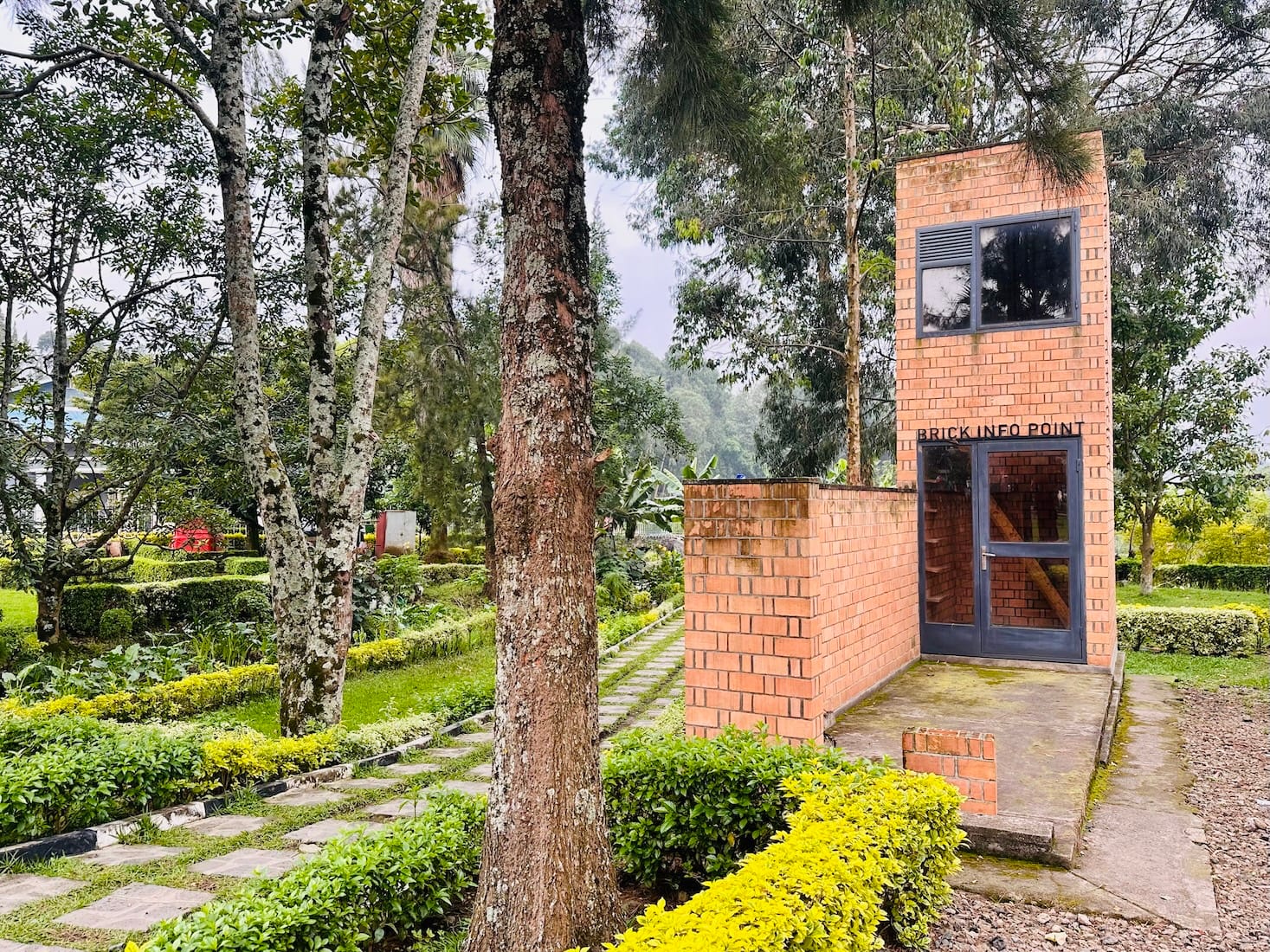
Your writer has been going back to the youth centre surrounding the Muhoza sector offices every weekend in the past four weeks. What follows comes from those visits.
I.
Entering the compound is an experience in itself. You step into greenery and long trees, with a narrow stream of clear water running through, feeding into the Kigombe stream that runs across downtown Musanze. Just at the entrance, on the right, there is a small brick structure — almost like a lookout point — set within a border of trimmed low hedge. It is easy to miss if you walk in distracted, but once you notice it, it begins to feel deliberate, as if marking the threshold between the street and what lies inside.
The sector offices sit at the centre, arranged in the familiar pattern of older administrative compounds: a main building in the middle, surrounded by wide open space that seems almost too generous.
The central structure, one can tell, has not changed much. But the surrounding buildings have. They are newer and at times more visible. One in particular stands out on the far left, built largely with volcanic stone rather than brick, its dark, textured walls catching your attention without trying too hard, with Rwanda-made granite tiles lining its floors. At the front, a small coffee shop, or rather a canteen, sits almost idle. Twice I passed through it, and both times it seemed paused, waiting for a crowd that never quite arrived, it seems.
I walked towards it because Agati Library sits upstairs. It was the reason I had come here in the first place.
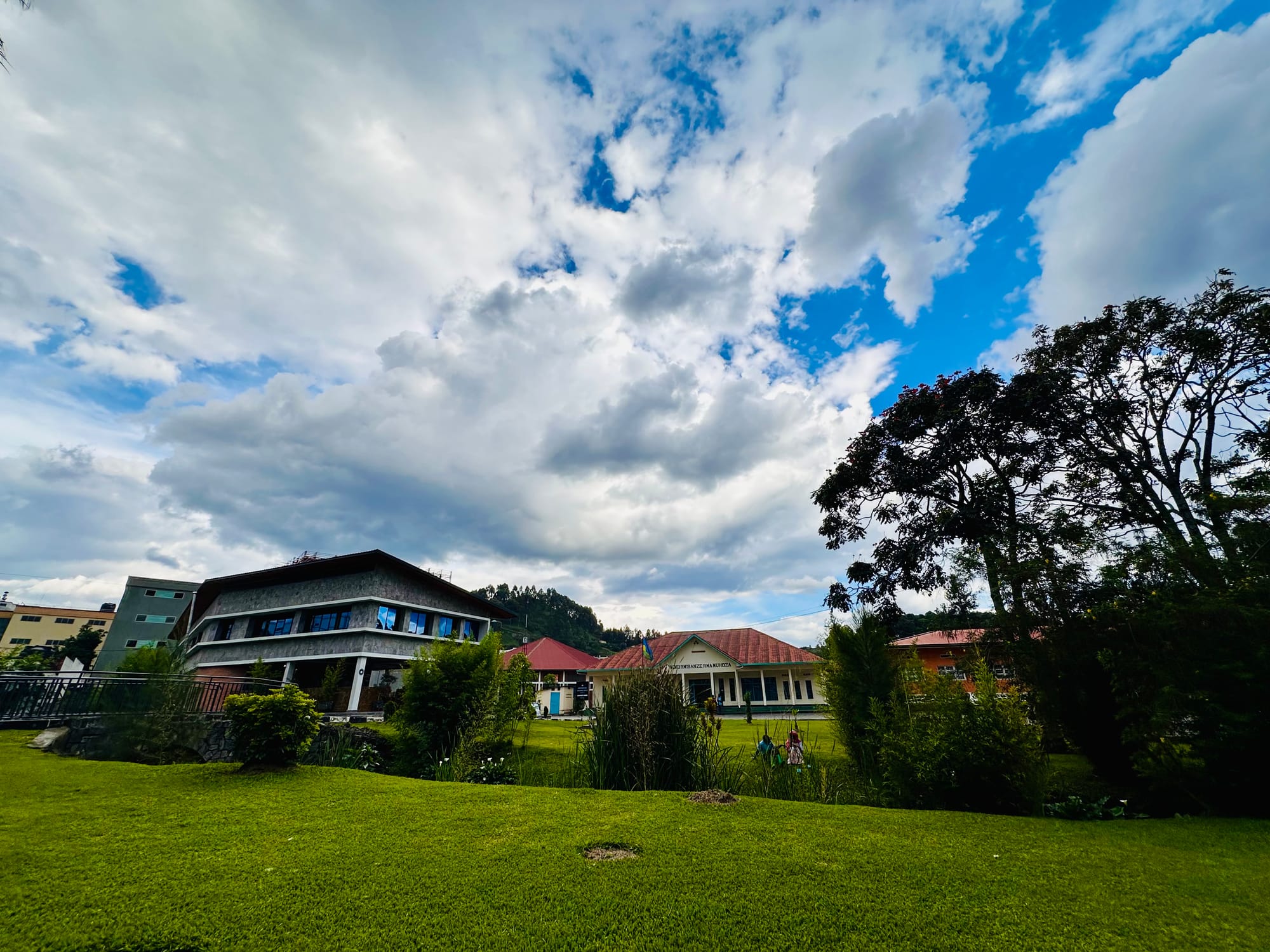
On my first visit to the library, four weeks ago, the children’s section was full. Kids were reading quietly, while the other sections were less occupied. Of the three older readers I paid attention to, all seemed to be reading through textbooks, and that was fine. One across a table in the corner was turning pages of a big novel. I moved between the shelves, scanning titles, not picking anything up, just observing. It was calm, as a library should be, though noise from outside would occasionally slip in — drums, voices, movement — enough to remind you that the rest of the compound was very much alive. I knew I would come back a few more times throughout month, so I left with only a glimpse of the space. No much interaction with the librarian who seemed to be helping two more members who had worked in.
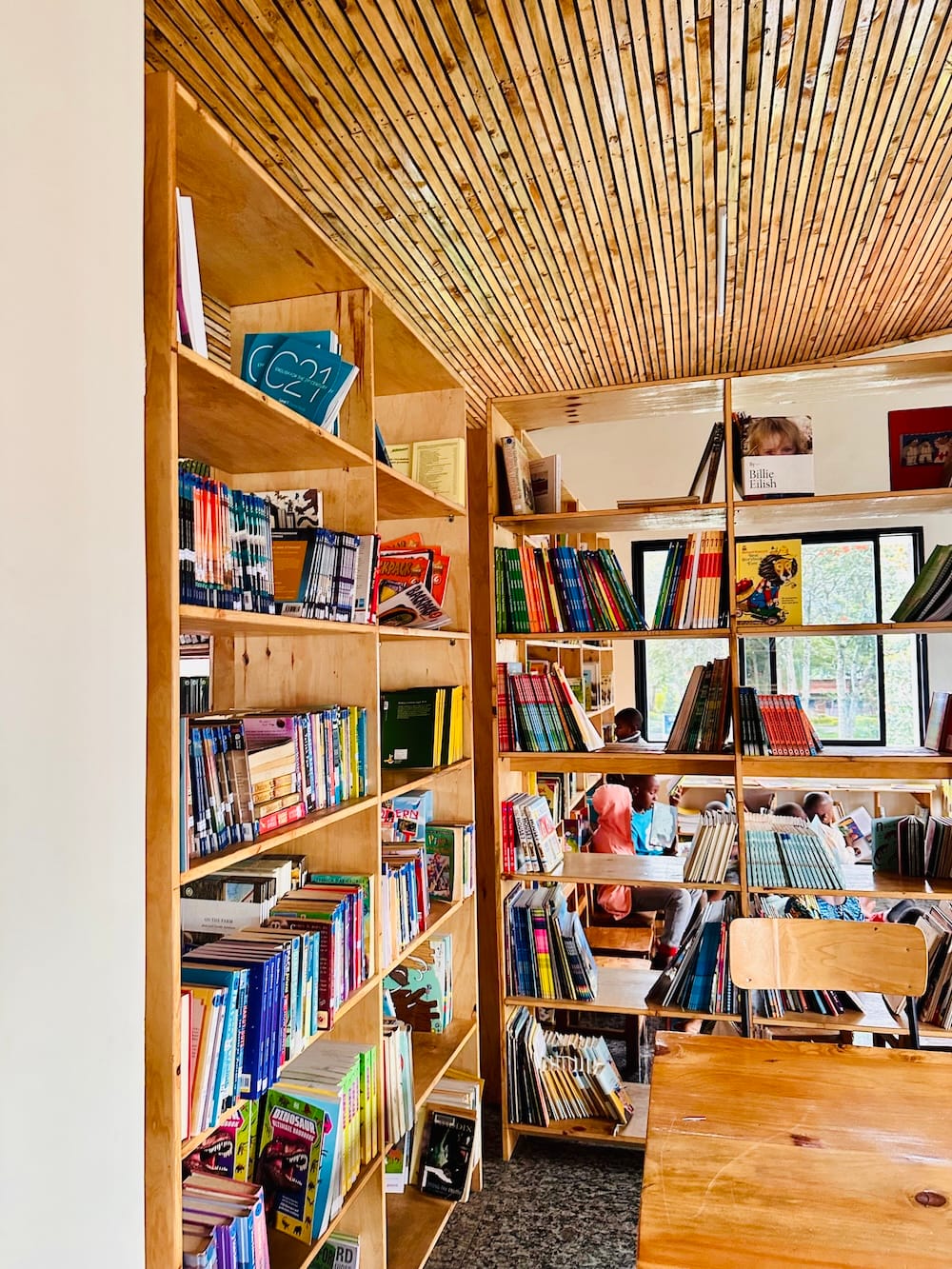
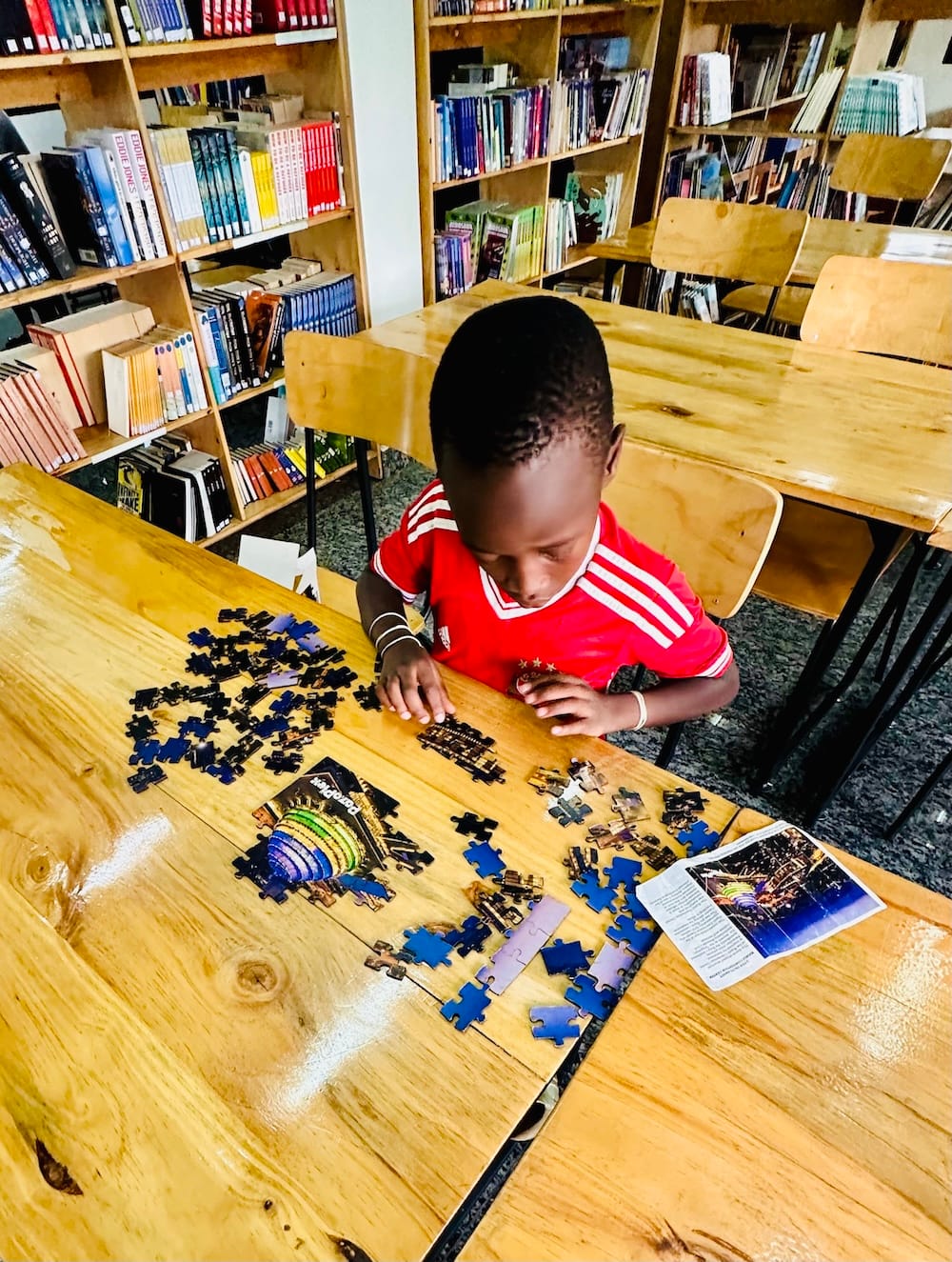
Bookshelves and a young person trying to solve a puzzle at Agati Library.
I stepped out to see what was happening elsewhere.
To the left of the main building, there is Hanga Hub, one of seven incubators established by the ministry for technology and innovation. Behind it, a crowd had gathered at what appeared to be a health communication centre. It turned out to be a talent show. Children rehearsed traditional dance to the rhythm of drums, moving in groups that formed and reformed, singing as they stepped in sync. Another group clapped, arms raised, swaying left and right as instructed, repeating the sequence until it settled into rhythm.
Later, I learned these shows are often organised as part of programmes for teenage mothers. They offer a mix of education, psycho-social support, and something less formal but just as important: attention, presence, a sense of being included. What stood out for me was not just the programme itself, but how it seemed integrated within everything else happening around it. In other places I have visited, such efforts tend to be isolated, almost hidden. Here, they sat within the life of the compound. And that was nothing but striking.
II.
Life in Musanze, more broadly, is different. Not in the way people usually try to explain places, but in a quieter sense. It is certainly something you notice after a few days of moving through it. There is less urgency to be seen, less concern with what is trending or what one might be missing out on. Even among young people, if you compare with other urban places, there is little of that performance. People here are doing things, but not for the camera, for instance. They are simply doing them. Perhaps the cold weather has something to do with it, but that is only a guess — what do I know?
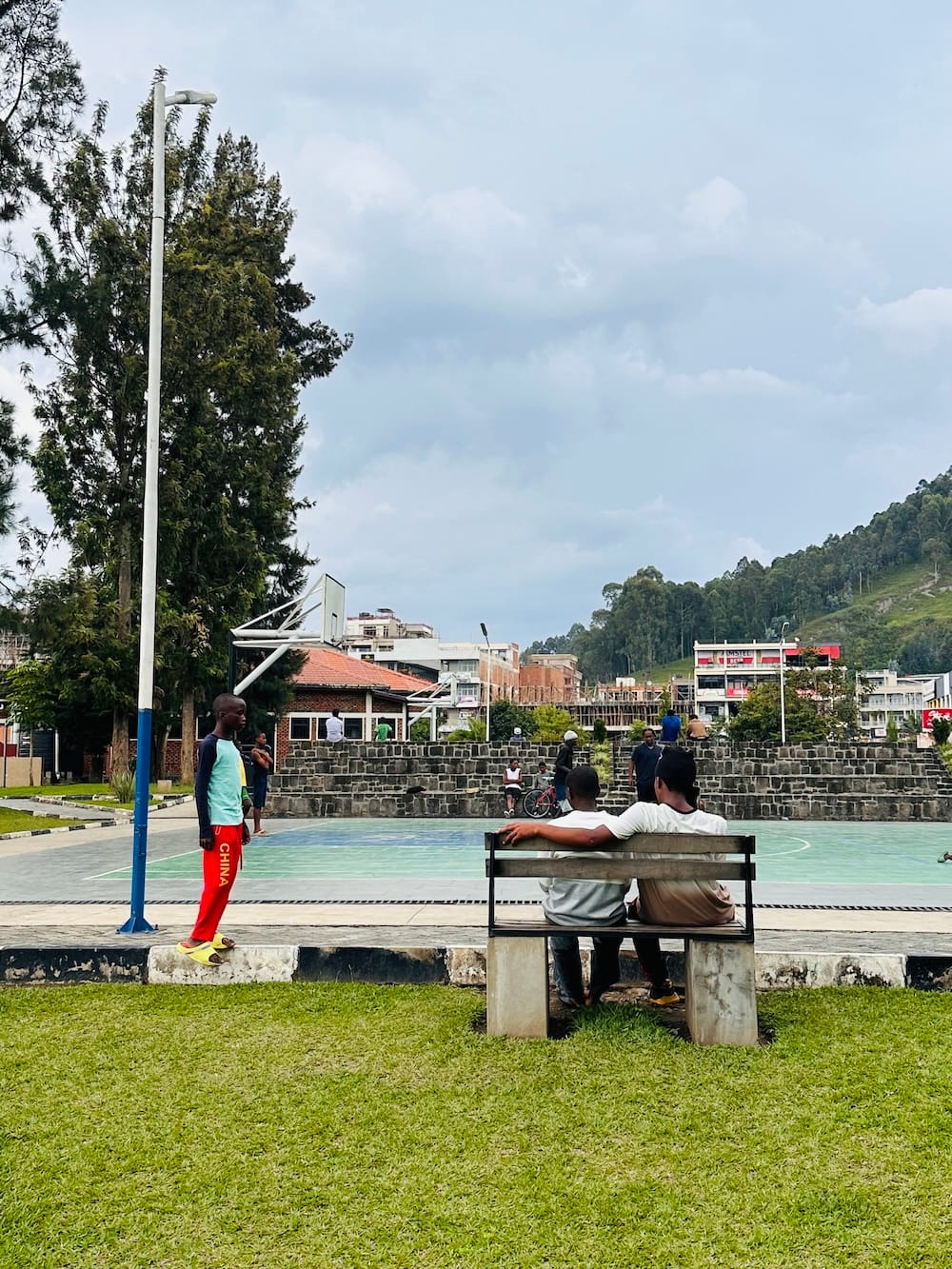
This past weekend, on Saturday, there was talk of a well-known gospel artist visiting one of the local colleges. Earlier in the day, there had been a community football match at the stadium. By evening, as I walked through town, I passed a large crowd moving in the opposite direction, still carrying the energy of the match with them. You could see that something had happened, something people had shown up for, and now they were returning home with it. And there are many things happening here, many things one sees as you walk through town or elsewhere. But I don't remember seeing people use their phones to take pictures or videos of what is happening around them, like you see it happening in Kigali or its suburbs. People don't seem particularly as concerned with the now-mainstream obsession with narrowcasting every little thing.
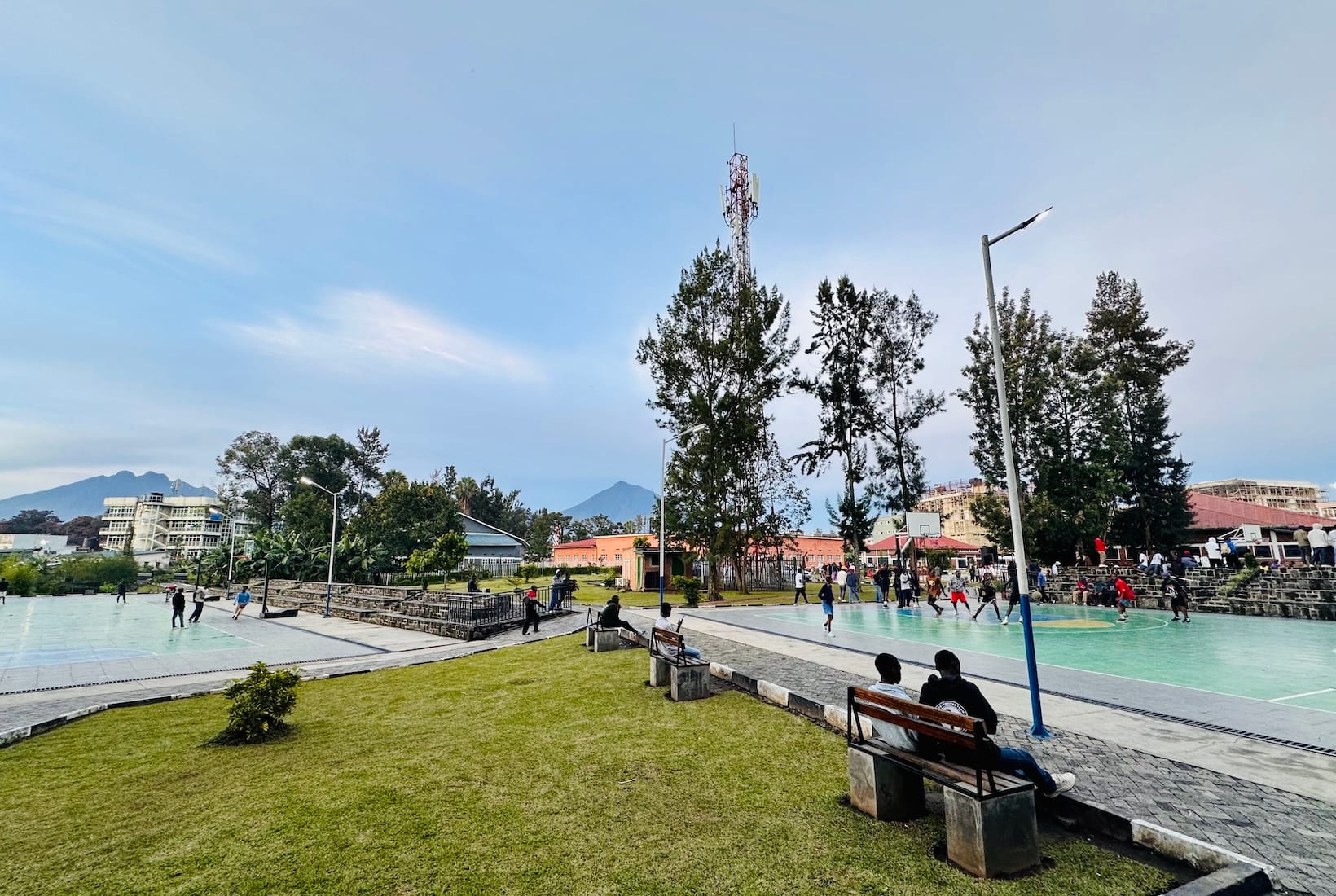
I returned to the youth centre each weekend over the past month, and there was no sign of inconsistency.
On my second visit, I walked to the far end of the compound, where two large playgrounds sit. There were groups of young people playing basketball, consistent and focused, as if they had been there for hours.
I had asked a young man I have known since the early twenty-tens, when I lived here for about two years, to come with me. Beni Abayisenga is now in his early thirties and works at the Rwanda Broadcasting Agency here, producing radio and reporting for the national network.
Before reaching the courts, we passed a large garden. Vegetables grew in neat rows, connected by a simple irrigation system. A man approached us and joked that we were invading the sector's kitchen garden. Beni did not hesitate. “We are helping expand it,” he said, “by taking some leaves home.” We all laughed and the man joined us for a chat. When I asked him if the vegetables wouldn't be safer with a shade, he said an agronomist was "looking into it." He was reassuring in his tone — that everything there was being taken care of by someone.
We kept walking.
Beni is convinced this youth centre, alongside Rafiki in Nyamirambo, is among the most active in the country. He says it plainly, without trying to persuade, but the place itself makes his point. Young people occupy every part of the space. The courts are full. The sitting areas in the gardens are taken by couples and small groups in conversation. Nearby, a group of modern dancers rehearses, repeating the same sequence until it settles into rhythm.
The place also seems used and not arranged. On many occasions, I observed young people playing cards, pool table, or simply running around playing what so often seemed like games that myself I cannot identify at sight.
Beni is now married. His wife runs a small shop near the football stadium of Musanze, and he speaks about it with the kind of attention that suggests it is not small for long. He is also not short of ideas. Sitting with him, even briefly, opens a stream of them — about Musanze, about growth, about what could be done better.
As we left the compound that day, I found myself walking between him and Sanjo Twagirayezu, the young man who had found us near the vegetable garden and who oversees youth performance at the centre. They began discussing an idea for a radio soap opera they had been considering. At first, it sounded like passing talk, but within minutes they were deep into structure, characters, and audience. The kind of conversation that, in a different city perhaps, might require a scheduled meeting. Here it unfolded over a short walk. Beni did not hold back and I listened, slightly behind, careful not to interrupt.
That weekend I got a further glimpse into what this centre meant for young people here but also how they were involved in running it. I do not remember seeing an government official overseeing this part of the compound, and that is usually not a bad sign.
Beni and I drifted into town after the chat with Sanjo, and he pointed things out as we walked: a new shop, a road that had been fixed, a business that had closed, another that had quietly grown. He spoke in a steady flow, connecting small changes into something larger, and before long I kind of began to see the town through him.
We stopped at Silverbacks Cafe and sat for a while. The conversation did not change much; it simply stretched. Ideas, observations, small details that seemed to matter more the longer you sat with them. Later, we walked to the central market. Even late in the evening, it still looked busy. Fresh produce, cool air, vendors still engaged in conversation, still willing to explain where things came from.
“These ones,” one vendor told me, lifting a bundle slightly, “come from my cousin’s farm, eight kilometres from here.”
III.
I went back to the centre for a book café at Agati Library on the third weekend. The adult section was full this time, chairs arranged in a loose circle. A panel of two — a South Sudanese and an American — with a Rwandan moderator, discussed Chimamanda Ngozi Adichie’s famous book "Americanah", moving between race, perception, power, and the small ways these things shape everyday life. At one point, a young woman said, “You only understand some of these things when you leave home. And when you come back, you see them differently,” and the room held that thought for a moment before moving on.
The people at the book cafe were young and they all seemed keen to engage in literary conversations like I had not seen in a long time. I also met Denyse Umuhuza, who co-founded the library, and my somewhat cultural friend Aline Gaju, who was in town for a short visit.
After the event, a man approached me, slightly shy but persistent. He asked if I was an avid reader, then admitted he had struggled to read. “It’s not in our culture,” he said, “but I am looking for ways to start.” He directly asked me to give him tips, something I'd rather not do on an ordinary day (for this writer is nofan of how-to). But I told him the key is to begin small — a children’s book, a travel guide, if you will — and to keep going, even if the first attempt does not hold his attention. He nodded, stayed a little longer, then left. I hope he is able to pursue that endeavour.
Outside, the mood had shifted again. The basketball courts had drawn a crowd, and this time the game felt organised, perhaps a visiting team playing a local side. The crowd was engaged, reacting to each moment, calling out instructions and encouragement as if they were part of the game itself. It did not take long to end, as time had run upwards.
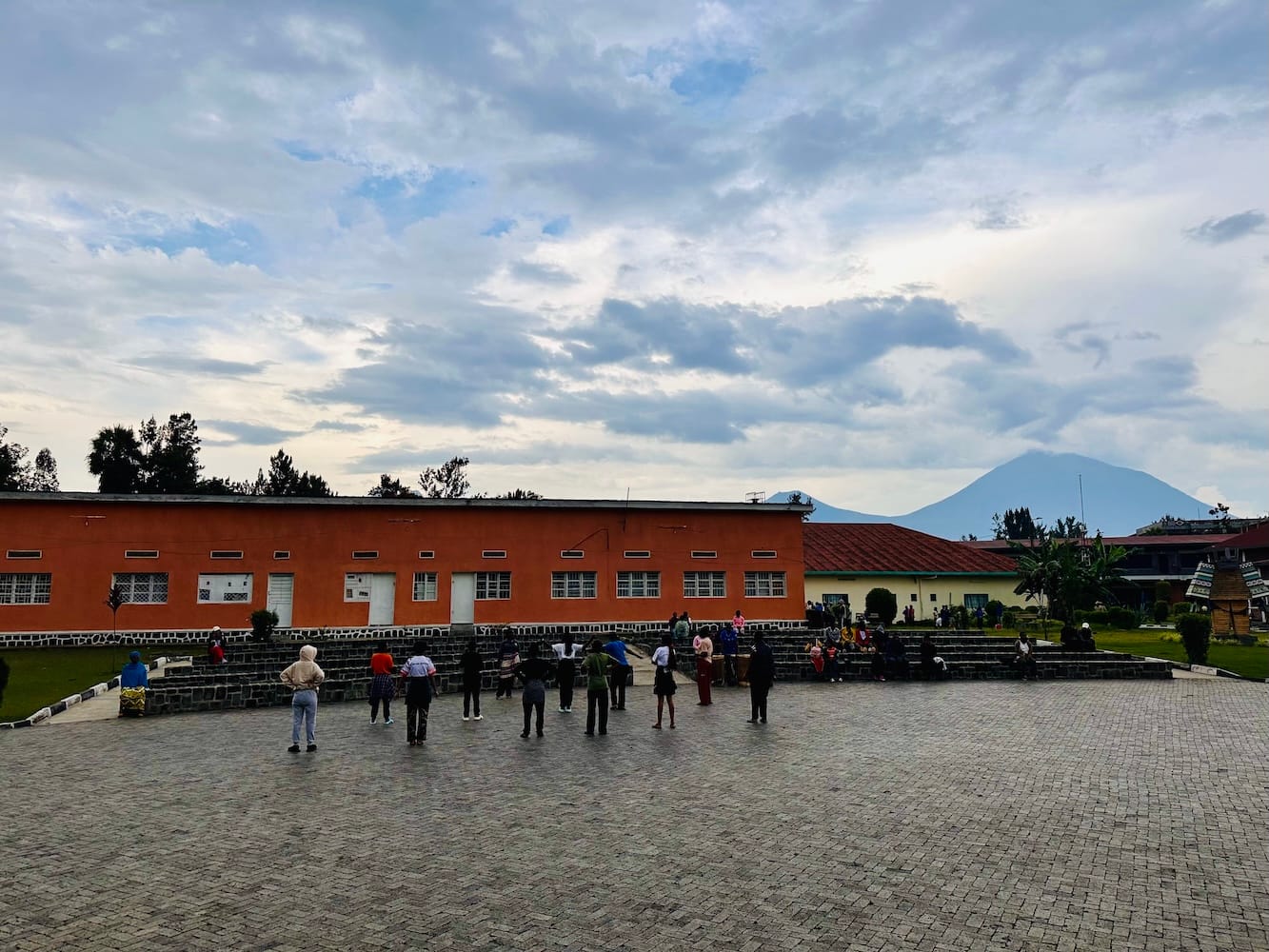
I also found a youth volunteer I had met before as I walked through the spaces around the playgrounds. “The health programmes ended earlier,” he told me. “Today they are just moving around — computer lab, sewing, talking and socialising.” He described himself as a youth coordinator, a role that seemed to involve making sure things run as they should, that people find their place within the space.
Later in the evening that day, I walked from the centre with Gaju and her friend to go grab a drink at Luna, a local pub I had also visited a few times before. I knew some faces would be familiar once we reach there, so it all invited a sense of ease. Your writer's moral and intellectual curiosity also enjoyed listening to Gaju speak about her work in community-based trauma recovery and peace-building, and her thoughts about expanding it here. Her friend, who had spent years away, spoke with certainty about returning. There was chatter about Musanze and the world outside, and there was chatter about reconnecting and exchanging on what's possible here and, of course, getting things going.
IV.
On another visit Thursday afternoon this week, I took a different path through the compound. The sun was out, and the playing fields at the back were quieter than I had found them before. A few young people were on the basketball court, but fewer than on previous occasions, and two boys rode bicycles along the edge of the field.
Passing the small brick structure at the entrance, I noticed details I had missed before. On the far right of the compound sits the Musanze computer-based driver’s testing centre, administered by the police. Just before it, a handwashing station — three sinks in a row, built in white tiles and covered with iron sheets — stands unused. It appears to be a remnant of the recent pandemic period, a familiar sight across the country now.
On my way back, I also noticed the Musanze Employment Service Center, more central than I had first thought, sitting next to Agati Library on the upper floor of the same brick building. The building itself reveals more on closer look: not just granite tiles on the floors, but walls that combine brick with carefully laid volcanic stone.
What becomes clear, the longer you spend time here, is that this place offers something that is easy to overlook. Young people have somewhere to go, not in the abstract sense, but in a very physical, everyday way. They can play, read, learn, talk, try something new, or simply spend time in the presence of others doing the same. It is not one thing, but many things, existing side by side, allowing people to find what holds their attention, or at least something that keeps them moving.
A few days ago, I walked to the central Catholic cathedral, Notre Dame de Fatima. It’s one of my favourite places here in Musanze, not for any one reason but for how it sits above the town, open and wide, with steps that let you pause and look out without being in a hurry. From there, you see parts of town stretch below, and very few people passing through it at their own pace.
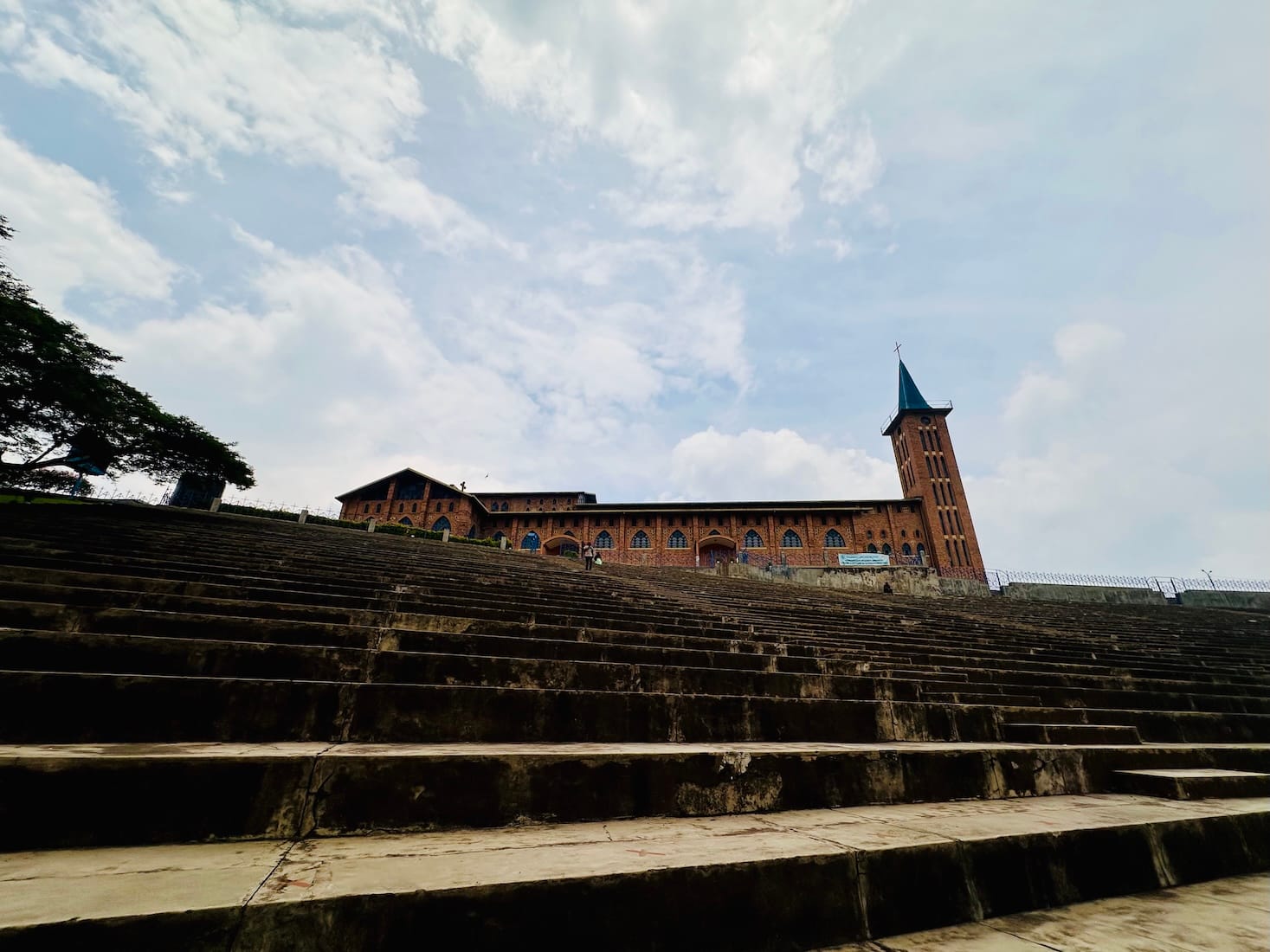
As I sat on the steps for a moment, a young man, perhaps in his late-twenties, walked past, then stopped and looked at me. When I greeted him, he came closer and said he had seen me at the youth centre.
“But you didn’t play a thing,” he said.
I laughed and told him I was only there to observe. He then nodded, not entirely convinced, and suggested I join them next time. “That’s how you understand this place better.”
Have something to say about this story? Message the editor or write in the comments section below.