
Notes from the Hills: Thirty-two years on
What commemoration reveals about memory, solidarity, and the future.

Turn phone calls into completed transactions. Pindo is a technology company specialising in Voice AI.
Thirty-two years on, April is no easy period for survivors of the genocide against the Tutsi, nor for the rest of the population. In Musanze, where this writer has been visiting for a little over two and a half months, the commemoration week is culturally deep and politically sensitive, much as it is elsewhere in Rwanda.
I have visited the memorial here, attended a service, and spoken with dozens of residents about the period. They do not shy away from carrying memory with them. They evoke a sense of long-term grief and remembrance, while also expressing relief that Rwanda has moved far beyond what many thought possible in 1994. After weeks of visits and many conversations, one is left to wonder what makes this place different.
Few Tutsis survived the massacres that swept through this northern part of the country. Rwandans often point out that the former prefecture of Ruhengeri has a complicated history. It was home to influential politicians and senior military officers during the years that preceded the genocide. Yet today it is difficult to ignore the degree to which people live together, work together, and build their lives alongside one another.
Reconciliation in Rwanda is not merely an act of performance.
It is hard to disagree with the optimists who argue that places like this, where so few survived the killing spree, demonstrate that where political will, stability, and prosperity take root, people can learn to bend their differences toward a common future.
I.
They say alcohol sets the truth straight and it is probably true. Three weekends ago, I witnessed a survivor allude to his legacy ethnic identity while directly addressing a woman seemingly in her early thirties. When the man called himself Inkotanyi with a straight face, many Rwandans would immediately understand the deeper meaning beneath the word: "I am a survivor. We have lived the hard way."
But what struck me was the woman's response. Her body language suggested no discomfort and nothing but understanding. With grace and ease, she simply said, "But we're good now?"
Such moments are easy to overlook, of course. They rarely make headlines, yet they reveal something important about contemporary Rwanda.
Everyday life in Rwanda is, if you ask me, often more encouraging than the image one encounters online. Genocide ideology and divisionism can appear prominent on social media because digital platforms amplify isolated voices and reward outrage. They leave little room for the quiet realities of daily co-existence.
And so reconciliation in Rwanda is not merely an act of performance. Many individuals and institutions depend on people who have consciously chosen a different path: seeing the world as it is while working toward a future where this country's citizens can live together in harmony.
That may be what it means to be Rwandan today.
Foreigners often ask me whether Rwanda's post-genocide story of reconciliation is genuine and sustainable, or whether it is largely a political narrative designed to project a positive image while obscuring restrictions on freedom.
Even with my own criticisms of Rwandan politics, I still find it difficult not to see reasons for optimism. There are certainly still wounds and small social conflicts, as there always will be. But much of what dominates conversations about ethnicity today is more trivial than existential.
The majority of Rwandans are young people born after 1994. Most do not choose friends according to ethnic categories. They do not choose business partners or colleagues that way either. If this is not a sign of progress, I say, then it is difficult to know what would be.
And if one wishes to imagine Rwanda's future, perhaps it is only sensible to see it through these young people.
II.
Around two in the afternoon on a Monday, the sky was beginning to clear. Rain had fallen earlier in the day as crowds made their way toward designated sites across the country to begin the week of commemoration.
The seventh of April is anything but ordinary. For survivors and their families, it carries the weight of sorrow and memory and grief. Sometimes it carries despair too.
In villages, towns, and cities across Rwanda, people gather to observe moments of silence, listen to testimonies, and reflect together on the history of the genocide. At noon, a speech by the president — now Paul Kagame — is broadcast nationwide from the Kigali Genocide Memorial in Gisozi, where the national commemoration service takes place. Few moments unite Rwandans in reflection on such a scale.
That afternoon, while walking along the main road in Musanze after the ceremonies had concluded, I noticed four women coming from a commemoration event. They walked slowly, holding one another as they made their way down the road.
I knew nothing about them, I did not stop them, I did not ask where they had come from or what they had experienced. But what stood out was the tenderness of the moment as I stopped briefly and observed.
They seemed deeply attentive to one another. There was kindness in their gestures, compassion in the way they walked, and an unmistakable sense of solidarity between them. Perhaps that is what many Rwandans care about most thirty-two years after the genocide. Not simply remembrance in the abstract, but the assurance that no one must carry memory alone.
I visited the memorial site in Musanze the day before. A friend had told me about its particularity and I was curious to learn more. At the Cour d'Appel, as it is known, the story does not get easier. (In truth, there is no easy way to tell the story of a genocide.)
In this former Court of Appeal building, no one survived the massacre except for a woman who had been taken away by the perpetrators. More than eight hundred Tutsis perished there.
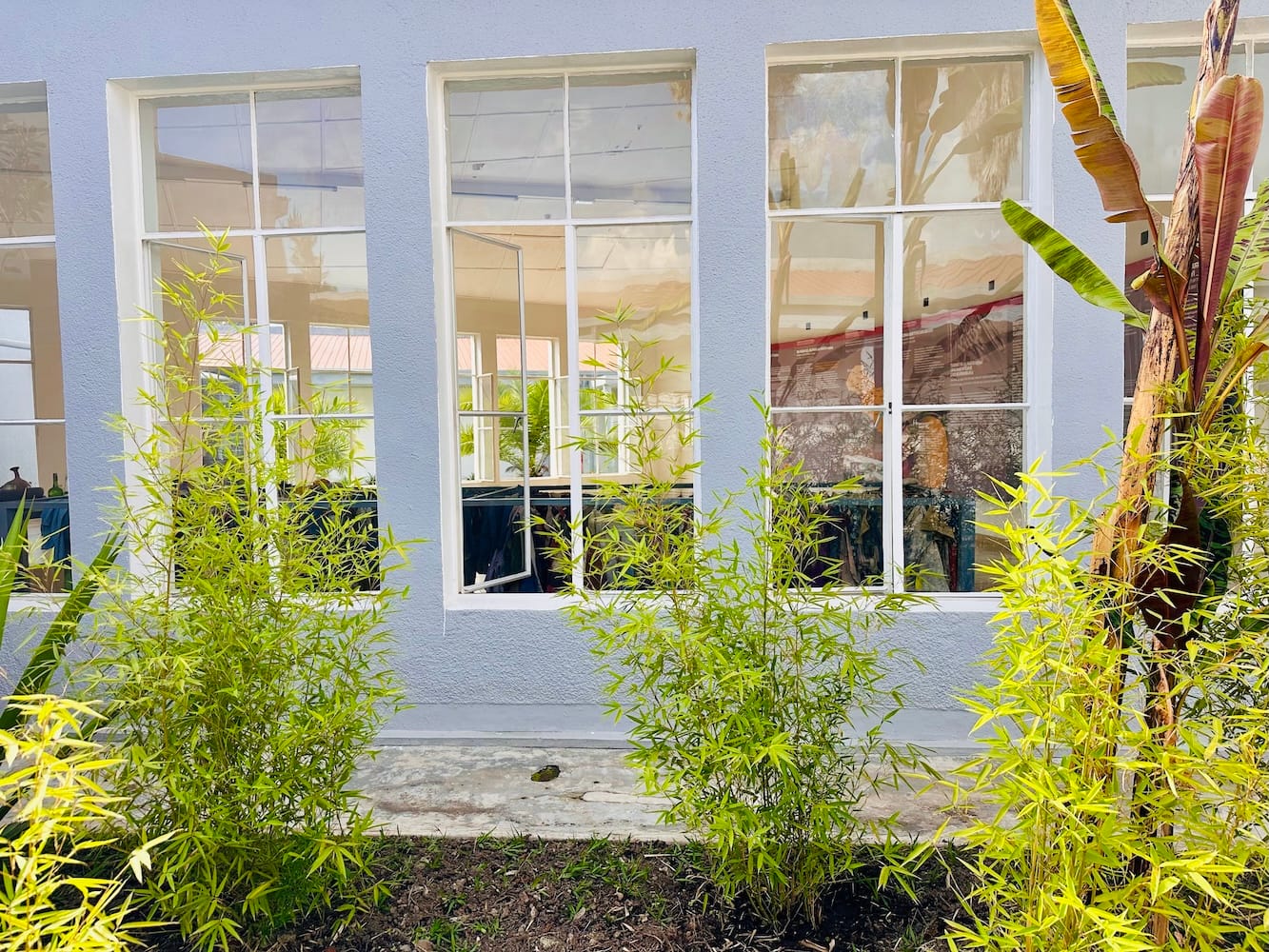
When I lived in Musanze over a decade ago, the genocide memorial was located in an open-air compound in Kizungu, near where old colonial houses are located. A few days after arriving in Musanze earlier this year, I walked past the site and was struck by how different it looked.
The compound appeared overgrown and neglected. For a moment, I assumed it had simply been left behind, surrendered to time and entropy. The once-maintained garden, with its marked graves and crosses, seemed almost forgotten. But the memorial had been relocated in 2022.
The Cour d'Appel is believed to be the only courthouse in the world where mass killings took place. As one guide told me during my visit, it is "a perfect demonstration of how the justice sector failed Rwandans in 1994."
The memorial itself illustrates the extent to which ordinary institutions became instruments of persecution. Many of those who might have been expected to stand against injustice instead participated in it. Inside, the main courtroom introduces visitors to the history of the genocide in Ruhengeri. Adjacent rooms display clothes and personal belongings recovered from victims.
Thirty-two years later, the genocide remains so vast that our understanding of it is still incomplete.
Kitchenware and cutlery suggest families seeking refuge. Bottles of lotion and fragrance hint at different social and economic backgrounds. Children's clothes reveal how many of the victims were very young.
The objects are ordinary. That is precisely what makes them difficult to confront. And so it is a unique memorial.
III.
Survivors of the genocide often tell me what concerns them about the present day, and it is rarely what outsiders might expect. They do not often worry that young people are forgetting history. Nor do they frequently express anxiety that future generations will fail to carry the memory of 1994 with sufficient care. More often, they speak about leading decent lives, finding stable work, caring for their families, and raising responsible children.
Their aspirations are usually ordinary. And increasingly, they seem hopeful.
I once travelled to the southern district of Ruhango to meet a group of women who had survived a massacre in Ntongwe. A cousin living there wanted me to meet one of them, a secondary school teacher called Justine Uwamariya, because he knew of my interest in literacy work.
The women gathered at a small house overlooking a primary school in Nteyo Sector. The walk there was exhausting in the July heat. By the time we arrived, I was drained and unsure why I had been invited. But when I met Mrs. Uwamariya and her neighbours, I realised they wanted to meet me for reasons beyond curiosity. They had heard that my own father had worked in the Ministry of Education before the genocide.
"It is God's gift that you, too, are working in education," she told me. And that simple remark stayed with me.
I asked what it was like to teach there. Their answers were overwhelmingly positive. I left inspired and determined to return. And two years later, I did.
Throughout those years, we stayed in touch by phone, often discussing changes in the education system and the challenges they faced. Yet not once did Mrs. Uwamariya, or any of her colleagues, tell me they feared their children or pupils were becoming detached from history. Not once did they express that particular anxiety about the future. This, despite having survived extraordinary hardship.
Many lived modest lives yet they had remarkably little to complain about. When I returned during the rainy season of 2016, I found my cousin working in a field roughly two kilometres from where we had first met. Together with two of the women, he had begun cultivating sorghum as part of a small business venture and it was going well.
As we spoke with a regional agronomist advising them, the conversation turned toward what made the region special. Their answers echoed what I had heard elsewhere: A quiet commitment to work, to continuity, to building a life patiently. They spoke less about rupture than about possibility. And when survivors speak about the future, they more often than not point to precisely this.
IV.
A few evenings earlier, during the commemoration week, I met a local hotelier for a drink. He had attended a memorial service before joining me and our meeting had nothing to do with the subject of genocide. We spoke about business, tourism, and the changes taking place in Musanze. But in Rwanda during April, the subject has a way of finding its place in conversation. As we talked, I found myself describing the optimism I often encounter among survivors and in communities that lived through the violence. He listened carefully but seemed troubled by something he had heard earlier that day. Then he interrupted me.
"I understand people can do all sorts of things," he said. "But killing your own child?"
The question hung in the air. He was not asking for an answer, nor did he expect one. What struck me was that he was not speaking as a survivor, a politician, a researcher, or a commentator. He was speaking as an ordinary man trying to make sense of something that resists explanation. And perhaps that is where many of us eventually arrive. We can study the genocide, document it, preserve its memory, and teach its history. We can understand its politics, its mechanisms, and the circumstances that made it possible. But some parts of it remain beyond our grasp.
But his question reminded me of another conversation, years earlier, about the limits of what we know.
In April of 2015, colleagues at the literacy organisation I run hosted a small roundtable at the public library in Kacyiru to discuss writing about the genocide. We invited a lead researcher from the national commission responsible for genocide research and memory. One of the young writers in the group asked the expert how much we truly knew about the genocide and how that knowledge should shape our writing. His answer was simple. Calmly and without performance, he said: "We know little."
And that is perhaps the irony.
Thirty-two years later, the genocide remains so vast that our understanding of it is still incomplete. The truth, and our attempts to comprehend it, remain larger than any single testimony, archive, or book. It continues to shape the limits of what we know.
Yet perhaps understanding is not the only thing that matters. On that afternoon when I saw the women who walked down the road, holding one another after a commemoration service, I knew nothing about them. But perhaps there was something in that small act that said more about Rwanda today than any explanation ever could.
Have something to say about this story? Message the editor or write in the comments section below.